ARE YOU EATING PETROLEUM?! (Petroleum derivatives in cosmetics)
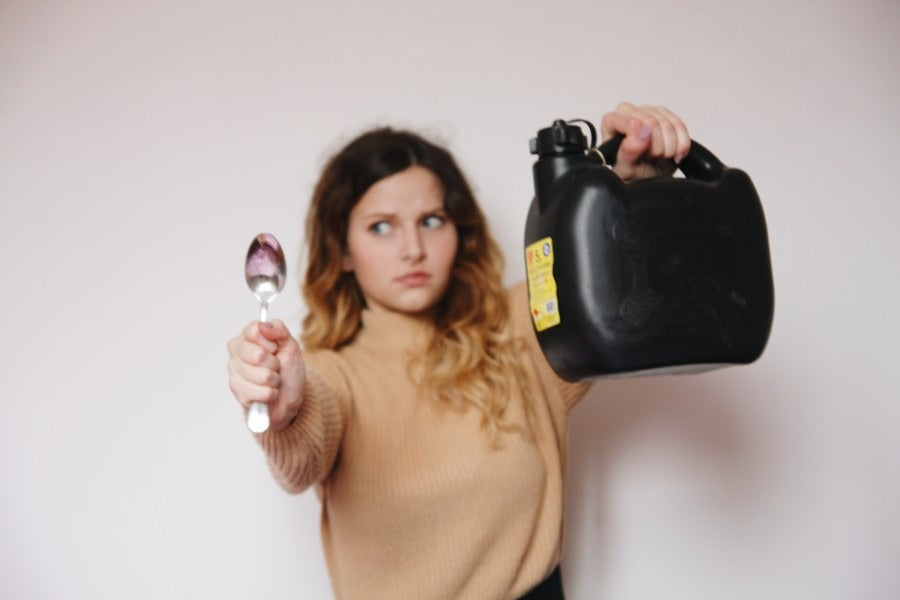
The average woman is said to eat 21.9 grams of lip products a year (Source). For many women, applying lip balm and lipstick throughout the day is second nature. When we drink, eat or lick our lips, some of that product ends up in our bodies. So what do lip balms have to do with petroleum? Most of them contain petroleum derivatives, which are by-products of oil refining.
What are petroleum derivatives? Petroleum derivatives, also known as petrochemicals, are chemical products made by refining crude oil. They include petroleum jelly (Vaseline), paraffin, mineral oil and others.
Why are they used in cosmetics? Because of their occlusive effect: they stop water evaporating from the skin and protect it from microbes and external factors. They are also cheap, don't go off, and have no smell, colour or taste. They also help improve a product's texture.
If you read articles in English, you'll soon come across the claim that petroleum derivatives contain PAHs (polycyclic aromatic hydrocarbons). These are potentially carcinogenic, have been linked to breast cancer, are bioaccumulative (they build up in the body) and disrupt the hormone system. But before I scare you: in Europe, their levels in cosmetics are strictly controlled and limited. Limits in the US are less strict, and most articles about PAHs in cosmetics come from there. In the EU, petroleum derivatives go through several purification steps that remove all potentially harmful substances.
What if we swallow them? The amount of petroleum derivatives we swallow each day from lip balm is below the safety threshold, so it poses no health risk.
Even so, they are not the best ingredient for cosmetics. Petroleum derivatives are hydrophobic and don't pass through the skin barrier. They stay on the surface, where they don't nourish the skin but simply seal it and clog pores, which can lead to acne. They also block water from moving in and out of the skin and stop the skin from getting rid of toxins. Used every day, they can also “spoil” your skin. It gets used to constant protection against moisture loss, and when you stop using the product, it loses even more moisture than before. You end up with skin that's even drier than when you started.
How can you tell if your balm contains petroleum derivatives? Check whether the ingredient list includes any of the following: Vaselinum, Petroleum, MOAH or MOSH, Paraffinum Liquidum, Paraffin, Microcrystalline wax, PEG, PPG, Ozokerite, Propylene Glycol, Isopropyl Alcohol, Dioxane, Ceresin.
What can you use instead? Plant oils and butters are a great alternative. You can find natural lip balms without petroleum derivatives here.
By choosing natural cosmetics, you avoid petroleum derivatives that harm the environment – and your skin will thank you too.