Miha Larisi: We need to value our work and our honey more
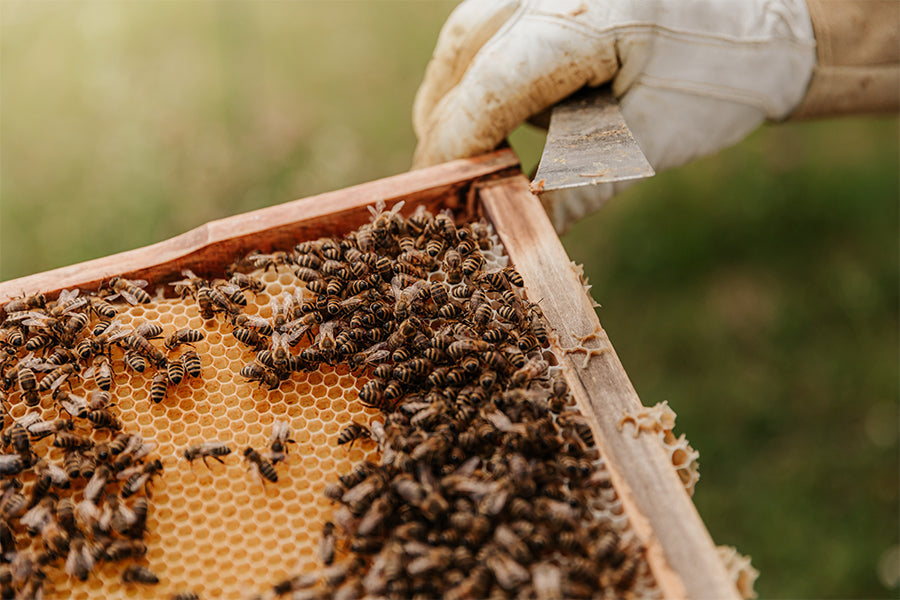
Miha Larisi is a beekeeper from the Gorenjska region of Slovenia, from the village of Grabče. He is a great lover of nature and animals. We spoke on the phone just as he was finishing up with his bees. We talked about how he got started, how he built up his knowledge and experience, how aware people are of the importance of bees, and the quality of Slovenian honey.
How did your beekeeping story begin?
It started when I planted fruit trees at home, but there were no bees around. So, with a little encouragement from my wife's parents, I decided to get one colony for pollination. That one colony has since grown into 14 colonies at my place and 10 at my in-laws'. It's not my main job – it's a hobby alongside my day job.
So you took up beekeeping out of necessity, if I understand correctly?
Not so much necessity – more curiosity. Beekeeping is very popular around here, so I grew up surrounded by it and was always interested in it. I love animals in general. But I didn't get into it because I had to. It always fascinated me, and seven years ago I started taking it a bit more seriously.
Where did you first learn about beekeeping?
First I did the beginners' course run by the Slovenian Beekeepers' Association. I have to say I picked up quite a lot of useful information there. Apart from that, I read a lot of books and a few beekeeping forums, but I gave up on those, because they confuse you more than they teach you anything sensible.
Since I use a stackable hive system rather than the traditional hives typical of Slovenia, I didn't have a mentor. I mostly taught myself from books and the internet. Among other things, I read a book by a very well-known and successful beekeeper, where I came across a saying I really liked: the beekeeper does something and thinks the bees will follow, but the bees always do things their own way. After all, it's a wild animal that nobody has ever tamed.
You were with your bees this morning. What does the work look like at this time of year?
Right now the colonies are growing fast. They need to be properly prepared before the main nectar flow. The colonies expand in the brood chamber, we add honey supers to some hives, we try to prevent swarming… Swarming is a beautiful natural phenomenon, but it's not really welcome for a beekeeper who doesn't want to increase the number of colonies.
A MINI BEEKEEPING GLOSSARY
COLONY: the community of bees living in one hive. A colony has one queen, worker bees and drones. A hive usually has anywhere from 5,000 bees in winter to 70,000 at its peak.
SWARMING: the natural way colonies reproduce. The colony splits into two parts: one stays in the hive, the other leaves it.
What's your favourite job of the year?
Extracting the honey, of course, because that's when we know our year-round effort has paid off at least a little. That's surely every beekeeper's goal. A swarm is also a wonderful sight, when the air in front of the apiary is black with bees. But extracting the honey is definitely the most anticipated and most beautiful moment. The last two years were very poor, though. I made just enough honey for us to enjoy at home, and maybe a few jars for friends.
I'd also like to touch on how aware the general public is of bees and beekeeping. What's your view?
That's a subject you could really dig into. Many people think honey is simply a lovely product, but the sad truth is that honey is the most frequently adulterated food there is. It's often some kind of sugar syrup, frequently corn starch, which bees somewhere in China turn into fake honey. This “honey” reaches us at a very low price, and in the shops we pay €10 for it.
That's exactly what I wanted to ask. Do we in Slovenia realise what we're buying and what Slovenian honey is worth?
There's very little awareness. The problem starts with beekeepers themselves. In shops, you'll hardly find Slovenian honey for under €18, yet many beekeepers sell theirs for €6. So the question is: do beekeepers not value their own work, or are they selling fake honey?
I think it's extremely important that beekeepers first start valuing their work and price their honey accordingly. The Beekeepers' Association also publishes recommended prices, which I follow. I sell my honey from €12 upwards.
There's also a strong push to change how jars are labelled. They often say “blend of EU and non-EU honeys”, which hides adulterated honey from all over the world. The Beekeepers' Association is working with the ministry on greater transparency, so that the actual countries of origin are listed. That would also make shoppers stop and think about which honey they buy – honey of known origin, or a blend of dubious origin.
I always keep in mind that this honey is first and foremost for me and my children.
I really liked it when you mentioned that you're one of the few who take a more ecological approach to beekeeping.
That's right. I don't have a certificate, though, and I don't intend to get one. It involves a lot of costs and paperwork. Maybe one day, if I expand production.
For now, what matters most to me is that this honey is first and foremost for me and my children. So it's important for me to know it doesn't contain anything harmful. That's my guiding principle.
Finally, could you share one thing you think too few people know about?
Oof, that's a tough one. Maybe just that we don't realise how powerful and precious nature is. We don't value it enough, and we litter far too much.